ARP Certificate Network Security Credentials for IT Professionals

ARP Certificate

Network Security Credentials for IT Professionals

Latest Articles

The Layer 2 Blind Spot That Most Penetration Tests Never Reach — And What Attackers Do With It
Network Security

The Layer 2 Blind Spot That Most Penetration Tests Never Reach — And What Attackers Do With It

Most penetration testing engagements stop well short of the protocol layer where ARP vulnerabilities live, leaving organizations with a false sense of validated security. Attackers who understand Layer 2 mechanics exploit precisely the gaps that standard pen test methodologies overlook. Security teams that fail to demand protocol-level testing are, in effect, auditing only half of their attack surface.

The Compliance Blind Spot Hiding in Plain Sight: Why Auditors Must Start Taking ARP Seriously
Network Security

The Compliance Blind Spot Hiding in Plain Sight: Why Auditors Must Start Taking ARP Seriously

SOC 2, ISO 27001, and HIPAA have long concentrated their scrutiny on Layer 3 and above, leaving Address Resolution Protocol largely untouched by formal audit processes. This oversight creates measurable vulnerabilities in enterprise compliance posture that adversaries are well-positioned to exploit. Understanding why ARP falls through the regulatory cracks—and how to close that gap—is now a professional imperative for IT security teams.

Why Self-Study Leaves ARP Knowledge Fragmented — And What Structured Credentialing Actually Fixes
Career Development

Why Self-Study Leaves ARP Knowledge Fragmented — And What Structured Credentialing Actually Fixes

For many IT professionals, self-directed study of Address Resolution Protocol produces surface-level familiarity rather than deployable expertise — a distinction that quietly stalls promotions and undermines salary negotiations. Structured certification programs close that gap by building systematic, verifiable competency that employers can evaluate at a glance. This article examines why the difference matters, and what real career trajectories reveal about the cost of skipping formal credential

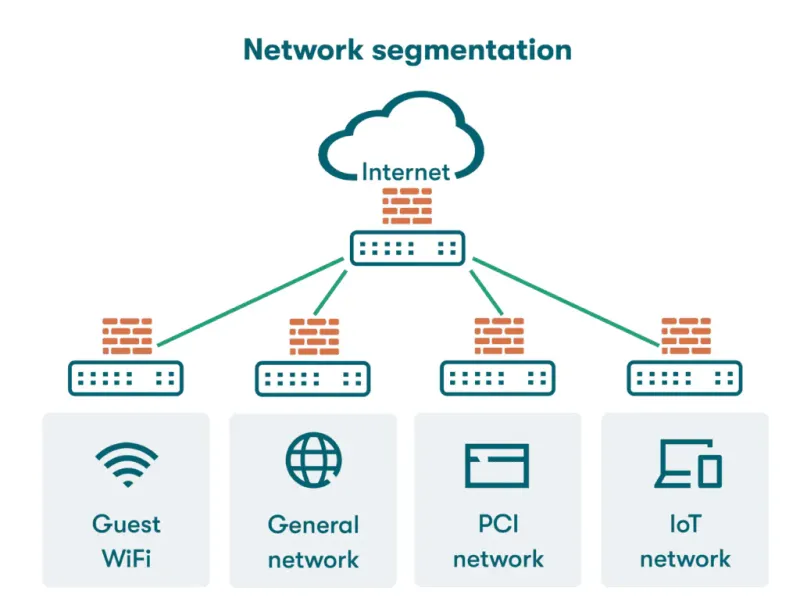
When Segmentation Fails Silently: How ARP Behavior Exposes the Gaps in Your Subnet Isolation Strategy
Network Security

When Segmentation Fails Silently: How ARP Behavior Exposes the Gaps in Your Subnet Isolation Strategy

Organizations frequently invest significant resources in network segmentation, only to find that ARP traffic quietly crosses boundaries they assumed were secure. This article examines how misconfigured ARP behavior at Layer 2 undermines subnet isolation, why compliance frameworks rarely catch these gaps, and what IT security professionals must do to diagnose and remediate them before attackers exploit the exposure.

The ARP Proxy Problem: How Flawed Assumptions Are Quietly Undermining Enterprise Network Architecture
Network Security

The ARP Proxy Problem: How Flawed Assumptions Are Quietly Undermining Enterprise Network Architecture

ARP proxy is one of the most misunderstood mechanisms in enterprise networking, and the consequences of that misunderstanding extend far beyond misconfiguration. Security teams operating in hybrid and multi-subnet environments routinely make architectural decisions based on assumptions about ARP proxy behavior that simply do not hold under real-world conditions. This article examines the gap between perceived and actual ARP proxy behavior—and what correcting that gap means for your network's sec

Zero-Trust Has a Layer 2 Blind Spot — And ARP Is Standing Right in It
Network Security

Zero-Trust Has a Layer 2 Blind Spot — And ARP Is Standing Right in It

Zero-trust architecture has reshaped how enterprises think about access control and identity verification, yet most implementations stop short of addressing ARP at the protocol level. This gap leaves Layer 2 environments exposed even when Layer 3 and above appear tightly governed. Understanding where ARP fits within microsegmentation policy is no longer optional for organizations pursuing NIST or CIS compliance.

Why Your On-Premises ARP Playbook Breaks Down the Moment You Move to the Cloud
Network Security

Why Your On-Premises ARP Playbook Breaks Down the Moment You Move to the Cloud

Security teams that built rigorous ARP defenses for physical networks are discovering those controls offer little protection once workloads migrate to AWS, Azure, or GCP. The fundamental way each cloud provider handles address resolution diverges sharply from traditional Ethernet behavior, creating blind spots that hybrid environment managers rarely anticipate. This article examines those divergences in detail and outlines provider-specific mitigation strategies that align with modern certificat

Certified But Unprepared: Closing the Gap Between ARP Exam Success and Real-World Incident Response
Career Development

Certified But Unprepared: Closing the Gap Between ARP Exam Success and Real-World Incident Response

Earning an ARP-related certification is a meaningful milestone, but hiring managers and incident responders across the United States are raising a consistent alarm: many certified professionals struggle when actual protocol-level attacks materialize in production environments. This article examines the structural disconnect between what certification curricula test and what enterprise security operations genuinely demand, offering a practical framework for transforming exam-ready knowledge into

Dynamic ARP Inspection Deployments That Keep Failing: A Compliance-Ready Troubleshooting Framework for Security Teams
Network Security

Dynamic ARP Inspection Deployments That Keep Failing: A Compliance-Ready Troubleshooting Framework for Security Teams

Despite widespread awareness of Dynamic ARP Inspection as a critical security control, many organizations discover during audits that their DAI configurations are incomplete, misconfigured, or entirely ineffective in production. This article examines the root causes behind failed ARP inspection rollouts and provides a structured framework security teams can use to validate, correct, and future-proof their implementations before the next compliance review.

Gratuitous ARP: The Overlooked Broadcast Behavior That Exposes More About Your Network Than You Realize
Network Security

Gratuitous ARP: The Overlooked Broadcast Behavior That Exposes More About Your Network Than You Realize

Gratuitous ARP packets are transmitted across enterprise networks thousands of times daily, yet most security teams treat them as routine background noise. Understanding what these unsolicited broadcasts actually communicate—about device behavior, network architecture, and potential adversarial activity—can transform how organizations approach threat intelligence at the protocol level.

How Default ARP Timeout Settings Are Quietly Sabotaging Your Compliance Posture
Network Security

How Default ARP Timeout Settings Are Quietly Sabotaging Your Compliance Posture

Across SOC 2, PCI-DSS, and HIPAA audits, misconfigured ARP timeout values are emerging as an overlooked source of compliance violations that catch even seasoned security teams off guard. Understanding the relationship between ARP cache duration and regulatory requirements is no longer optional for IT professionals responsible for audit readiness. This article examines where default configurations fall short and how practitioners can close those gaps before auditors do.

Mapping the Invisible: How Attackers Use ARP Traffic to Profile Your Network—And the Detection Signals You're Probably Missing
Career Development

Mapping the Invisible: How Attackers Use ARP Traffic to Profile Your Network—And the Detection Signals You're Probably Missing

Before a threat actor launches an exploit, they study the target—and ARP traffic is one of their most reliable intelligence sources. This article examines how adversaries leverage legitimate ARP behavior to map network topology, identify high-value assets, and locate security gaps, while providing security professionals with a practical framework for detecting reconnaissance activity before an attack escalates.

When ARP Caches Expire Too Soon: The Hidden Configuration Flaw Draining Enterprise Network Reliability
Network Security

When ARP Caches Expire Too Soon: The Hidden Configuration Flaw Draining Enterprise Network Reliability

Misconfigured ARP cache timeouts and TTL values are quietly triggering authentication failures, performance degradation, and compliance blind spots across enterprise infrastructure. This technical investigation examines how a single overlooked parameter can cascade into widespread network instability—and what IT teams can do to diagnose and correct it before auditors or adversaries exploit the gap.

Low-and-Slow ARP Flooding: The Bandwidth Attack Your Monitoring Dashboard Will Never Flag
Network Security

Low-and-Slow ARP Flooding: The Bandwidth Attack Your Monitoring Dashboard Will Never Flag

Sophisticated attackers are exploiting a fundamental blind spot in conventional network monitoring by sustaining low-volume ARP floods over weeks rather than launching obvious burst attacks. Traditional threshold-based alerting systems are structurally ill-equipped to detect these gradual degradation campaigns. This article examines the mechanics of the technique, documents real-world organizational impact, and outlines actionable detection strategies that security teams can deploy today.

The Protocol Knowledge Gap Employers Won't Tell You About — But Will Reject You For
Career Development

The Protocol Knowledge Gap Employers Won't Tell You About — But Will Reject You For

Hiring managers across the US network security industry consistently report that candidates arrive with recognizable certifications but lack the Layer 2 protocol fluency that security roles demand on day one. Mainstream IT training programs have largely sidestepped ARP and foundational network protocol instruction in favor of higher-level tooling and compliance frameworks. The result is a structural mismatch between what employers need and what the credentialing ecosystem is producing.

Protocol-Level ARP Validation: Building the First Line of Defense Before Threats Reach Your Network Perimeter
Network Security

Protocol-Level ARP Validation: Building the First Line of Defense Before Threats Reach Your Network Perimeter

Most enterprise security architectures address threats after they've already entered the network — but ARP validation frameworks shift that posture by verifying device identity at the protocol level before access is ever granted. This deep dive examines the technical mechanisms, emerging toolsets, and architectural principles that define modern ARP validation. Security professionals who command this knowledge are increasingly positioned as indispensable architects within their organizations.

The Help Desk Professional's Guide to ARP Mastery: A Protocol-First Path to Advanced Security Certifications
Career Development

The Help Desk Professional's Guide to ARP Mastery: A Protocol-First Path to Advanced Security Certifications

For IT support professionals eyeing a move into network security, mastering Address Resolution Protocol fundamentals offers a surprisingly direct route to certification success and real-world credibility. This guide outlines a structured, hands-on approach to building ARP expertise — from behavioral detection to mitigation strategies — that translates directly into an edge on certification exams and incident response scenarios. The professionals who invest in this foundational knowledge early co

ARP Cache Poisoning: The Silent Threat Undermining Network Security From the Inside Out
Network Security

ARP Cache Poisoning: The Silent Threat Undermining Network Security From the Inside Out

ARP cache poisoning has persisted as a critical vulnerability for decades, yet most organizations remain dangerously underprepared. This investigation examines why this Layer 2 attack continues to succeed in modern enterprise environments and what security teams can do right now to detect and contain it.

Your 12-Month Blueprint for Moving From IT Support Into Network Security Specialization
Career Development

Your 12-Month Blueprint for Moving From IT Support Into Network Security Specialization

For IT professionals working the helpdesk and eyeing a move into network security, the path forward is more structured than it might appear. This guide maps a realistic 12-month progression that builds foundational protocol knowledge, earns recognized credentials, and positions candidates for higher-paying security roles.

How Deep Protocol Knowledge Is Becoming the Career Differentiator That IT Security Professionals Can't Afford to Ignore
Career Development

How Deep Protocol Knowledge Is Becoming the Career Differentiator That IT Security Professionals Can't Afford to Ignore

In a job market saturated with generalist security certifications, IT professionals who invest in specialized, protocol-level credentials are quietly commanding higher salaries and landing roles at organizations that others cannot access. This career guide explores how network protocol expertise — including ARP and Layer 2 security knowledge — is reshaping hiring conversations at major technology firms, what the compensation data actually shows, and how certified professionals have parlayed deep