The Layer 2 Blind Spot That Most Penetration Tests Never Reach — And What Attackers Do With It

Photo: Shivam Goswami, Public domain, via Wikimedia Commons
Penetration testing has become a cornerstone of enterprise security programs across the United States. Organizations invest significant budget in scheduled assessments, expecting their vendors to surface the vulnerabilities that matter most. Yet a persistent and largely unacknowledged gap exists in how most of these engagements are scoped: Layer 2 of the OSI model — the data link layer where the Address Resolution Protocol operates — is routinely excluded, deprioritized, or treated as an afterthought.
The consequences of this omission are not theoretical. When a skilled attacker gains a foothold inside a network segment, ARP is often among the first tools they reach for. The protocol was not designed with authentication in mind, and that design limitation has never been remediated at the specification level. What has changed is the sophistication with which adversaries exploit it — and the degree to which defensive assessments have failed to keep pace.
Why Standard Penetration Test Scopes Avoid ARP
The exclusion of ARP-level testing from most engagements is not accidental. It reflects a combination of methodological convention, contractual risk aversion, and a knowledge gap among practitioners who were trained primarily on application and perimeter security.
Many commercial penetration test frameworks — including those derived from widely adopted industry standards — organize their testing phases around higher-layer protocols: web applications, Active Directory, exposed services, and credential-based attacks. Layer 2 testing, when it appears at all, is frequently listed as optional or flagged as potentially disruptive. Because ARP manipulation can affect traffic flows across an entire broadcast domain, some vendors exclude it by default to avoid triggering service interruptions during business hours.
The practical result is that organizations receive a report documenting vulnerabilities in their application layer, their patching cadence, and their perimeter defenses — while the underlying network fabric remains entirely unexamined. Security teams, reviewing those reports, may reasonably conclude that their environment has been comprehensively assessed. That conclusion is incorrect.
What Attackers Find When They Look at ARP
An adversary who understands Layer 2 mechanics approaches an internal network segment with a different set of questions than a conventional penetration tester. Rather than immediately targeting services and credentials, they begin by observing ARP traffic — mapping which IP addresses correspond to which MAC addresses, identifying gateway devices, and profiling the timing and volume of ARP broadcasts.
This reconnaissance phase is largely passive and produces no alerts in most security information and event management platforms. Standard intrusion detection signatures are tuned for known malicious payloads, not for the quiet observation of ARP behavior.
Once the attacker has established a working map of the broadcast domain, the next phase typically involves ARP cache poisoning — sending crafted ARP replies that associate the attacker's MAC address with the IP address of a legitimate device, most commonly the default gateway. Traffic intended for that gateway is redirected through the attacker's machine, enabling man-in-the-middle interception without breaking the communication flow for affected hosts.
In environments where Dynamic ARP Inspection has not been deployed or has been misconfigured, this technique succeeds with minimal effort. The credentials, session tokens, and cleartext data that traverse the redirected path become accessible to the attacker before any application-layer security control has an opportunity to respond.
The Evaluation Problem: Assessing Whether Your Pen Test Provider Is Actually Testing Layer 2
Security teams that want to close this gap must first assess whether their current testing arrangements address it at all. This requires asking direct questions of pen test vendors — questions that go beyond reviewing the methodology section of a standard proposal document.
A useful starting point is to request explicit confirmation that the engagement scope includes ARP spoofing simulation within defined internal segments. Vendors who respond by citing operational risk concerns without offering a controlled testing alternative are signaling a capability gap, not a safety-conscious methodology.
Additionally, security teams should ask for documentation of how the vendor monitors for and validates Dynamic ARP Inspection configurations. DAI, when properly deployed on managed switches, is the primary infrastructure-level control against ARP poisoning. A penetration test that does not verify whether DAI is functioning correctly — and whether its exception lists are appropriately restricted — is not providing a complete picture of Layer 2 exposure.
Finally, reviewing past reports for any mention of ARP behavior, broadcast domain analysis, or MAC address table assessment is informative. Reports that contain no reference to these elements almost certainly reflect an engagement that never reached Layer 2.
Building Protocol-Layer Testing Into Your Security Program
Organizations that have identified this gap in their current testing arrangements have several options for addressing it. The most direct approach is to revise the scope of future penetration test engagements to explicitly require Layer 2 assessment as a non-negotiable deliverable, with defined test cases for ARP cache poisoning, gratuitous ARP abuse, and ARP-based reconnaissance.
This scope revision should be paired with internal capability development. Security teams whose members hold certifications in network protocol security — including formal credentials that cover ARP mechanics, detection methodologies, and defensive configuration — are better positioned to evaluate vendor deliverables and identify gaps in reported findings. Protocol knowledge is not a prerequisite for commissioning a penetration test, but it is a prerequisite for interpreting one accurately.
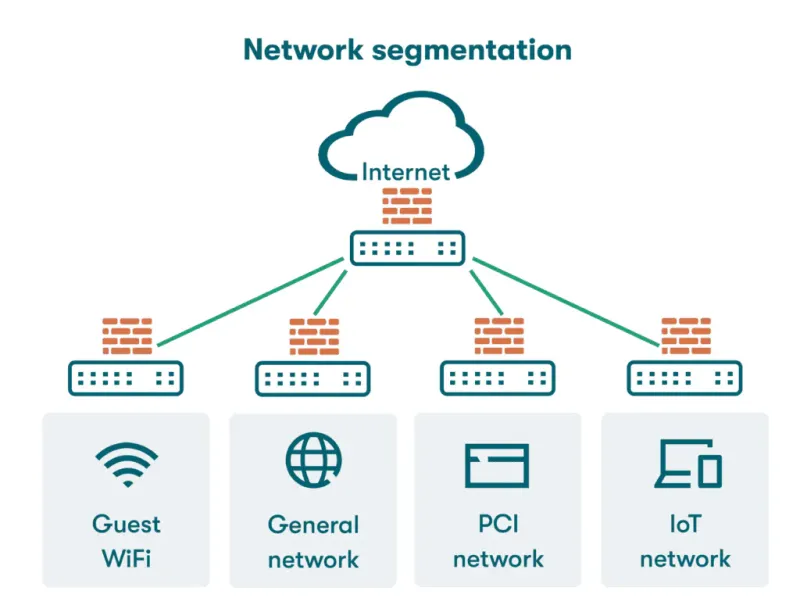
Internal red team exercises that specifically target Layer 2 controls can complement external engagements. These exercises allow security teams to validate the effectiveness of DAI configurations, test whether SIEM rules are capable of detecting ARP anomalies, and assess whether network segmentation is functioning as designed at the broadcast domain level — not merely at the routing level.
The Compliance Dimension
For organizations operating under frameworks such as PCI DSS, HIPAA, or NIST SP 800-53, the absence of Layer 2 testing from penetration test programs carries compliance implications that extend beyond technical risk. Several of these frameworks reference network-layer controls and require evidence that internal network security controls have been validated through testing.
Audit teams that do not ask specifically about the depth of penetration test coverage may accept reports that document only application and perimeter findings as sufficient evidence of compliance. However, organizations that experience a breach attributable to ARP-based lateral movement — following a penetration test that never examined Layer 2 — will face difficult questions about the adequacy of their security program.
Demanding protocol-layer testing is not merely a technical best practice. It is a defensible position in the context of regulatory accountability.
Closing the Gap
The persistence of this blind spot in enterprise security programs reflects a broader pattern: defensive practices tend to follow attacker behavior with a meaningful lag. ARP-based attacks are not new, but the systematic exclusion of ARP testing from penetration test engagements has allowed the gap between offensive capability and defensive validation to widen.
Security teams that recognize this dynamic — and take deliberate steps to close it through revised scoping, internal credential development, and informed vendor evaluation — are building programs that reflect how networks actually fail, not merely how they are expected to fail. That distinction, at the protocol layer where ARP operates, is where real security outcomes are determined.