Your Lab Is Lying to You: The Fidelity Problem in Home ARP Experimentation
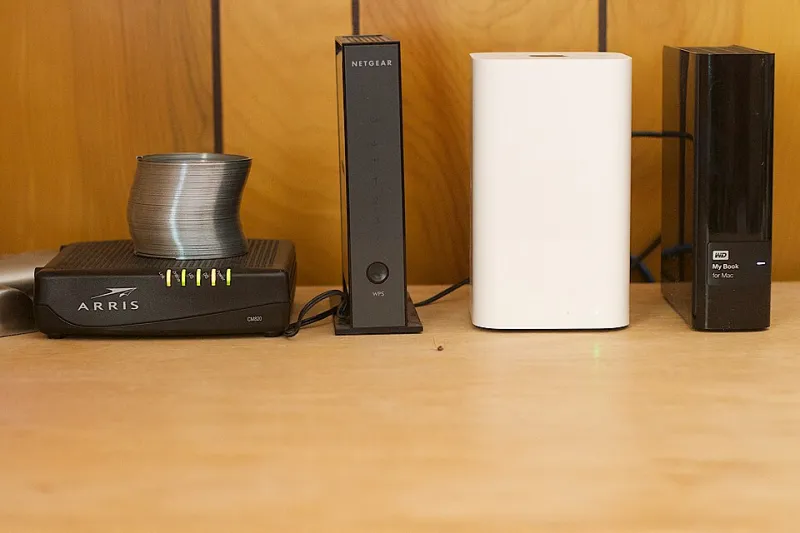
Photo: Alan Levine, CC BY 2.0, via Wikimedia Commons
Every ARP learning path worth its salt includes hands-on labs, and rightfully so. Reading about cache poisoning is not the same as watching it happen. But somewhere along the way, our industry adopted a quiet fiction: that the skills built on a flat home network transfer cleanly to enterprise environments. They do not. And worse, the lab often teaches precisely the wrong intuitions.
This is not an argument against home labs. It is an argument that most of us are building labs that lie — and that we should know exactly how they lie before we take their lessons into a production incident.
The Flat-Network Fallacy
The typical home lab looks like this: one router, one switch, two or three devices, all in a single subnet. ARP behavior in this environment is beautifully predictable. One gateway, one broadcast domain, cache entries that expire on schedule, and a clean, legible request/reply exchange every time.
Production networks are not beautiful or predictable. They are stacked switches with redundant uplinks. They are multiple gateways running VRRP or HSRP, which means multiple devices legitimately sending ARP replies for the same virtual IP. They are mixed-vendor environments where one switch's ARP timeout behavior differs from its neighbor's. A professional whose entire mental model comes from a flat lab will misread normal production behavior as an attack — or, more dangerously, misread an attack as normal behavior.
Consider gratuitous ARP. In the lab, a gratuitous ARP message is an anomaly worth investigating. In production, it fires constantly and legitimately: failover events, load balancer transitions, virtual machine migrations. The analyst trained on lab conditions flags every one of these, drowns in false positives, and eventually stops looking. That is not a skills gap. That is a training injury.
What Virtualization Makes Worse
Virtual switches compound the problem. Hypervisor networking layers handle ARP in ways physical switches do not — some filter it, some proxy it, some quietly rewrite it. A lab running entirely inside VirtualBox teaches ARP behavior of VirtualBox's virtual switch, not of a Catalyst or a Juniper. Add container networking to the mix and the divergence widens further: overlay networks, veth pairs, and bridge abstractions each reshape ARP behavior in ways that have little to do with what an enterprise access layer actually does.
None of this means virtualization is worthless. It means virtualized ARP observations should be treated as a different species of evidence, not interchangeable with physical-layer behavior.
Closing the Fidelity Gap Without Enterprise Hardware
The standard objection is that realistic fidelity requires enterprise gear most learners cannot afford. That objection is weaker than it looks, for three reasons.
First, used enterprise switching is dramatically cheaper than most people assume. Previous-generation managed switches from major vendors sell secondhand for the price of a nice dinner, and they support the features — DAI, DHCP snooping, VLANs, stacking simulation — that make production behavior production-like.
Second, network simulation platforms have matured considerably. Tools like GNS3, EVE-NG, and Containerlab can emulate multi-vendor topologies with redundant paths and failover behavior that a physical flat lab simply cannot produce. Combining one modest physical switch with simulated topologies gets you most of the way to realistic conditions.
Third — and this costs nothing — is deliberately corrupting your own lab. Introduce asymmetric configurations. Add a second gateway running a virtual IP. Break things on purpose and study what ARP does when the network is weird. Production networks are always weird. A lab that has never been weird has never told you the truth.
A Standard of Honesty
The fix is cultural, not just technical. Lab write-ups, courses, and certification prep materials should state explicitly what their topologies simplify and where the lessons will break down. Learners should treat every lab conclusion with a caveat: this is true in a flat network with one gateway — and then ask what changes when that assumption fails.
A lab is a model, and all models are wrong in some way. The professionals who excel at Layer 2 security are not the ones with the biggest labs. They are the ones who know exactly where their lab ends and reality begins.